- MMagnitude of Event
C++ Type:Real
Unit:(no unit assumed)
Controllable:No
Description:Magnitude of Event
- RJoyner-Boore or Epicentral Distance
C++ Type:Real
Unit:(no unit assumed)
Controllable:No
Description:Joyner-Boore or Epicentral Distance
- Vs30Shear Wave Velocity at 30m
C++ Type:Real
Unit:(no unit assumed)
Controllable:No
Description:Shear Wave Velocity at 30m
Ground Motion Simulation
Calculates a ground acceleration history using a ground motion model written in a python script
Creates a realistic ground motion simulation with given input parameters. The object generates a time-acceleration history using the process outlined in Sabetta et al. (2021). The required function inputs M,R,and Vs30 correspond to the earthquake magnitide, source-to-site distance, and shear wave velocity at a depth of 30m, respectively. F, R_type and n are optional parameters that correspond to the style of faulting, the type of source-to-site distance being used and the random seed to be used. The Magnitude of an event is a measure of its strength, the source-to-site distance is how far from the event we are interested in estimating the ground acceleration at, Vs30 is a soil property that describes the propogation of waves through the soil. There are 3 distinct fault types that can be specified in the function: Strike-Slip, Thrust Fault, and Normal Fault denoted as 'SS', 'TF', and 'NF'. The source-to-site distance can be defined in one of two ways, either as Joyner-Boore distance or Epicentral distance which can be input as 'Rjb' and 'Repi'. The code block below shows the distinction between these two commonly used distance measurements. The function values return in units of (g), so the scale_factor by default is set to 9.81
[Functions<<<{"href": "../../syntax/Functions/index.html"}>>>]
  [groundmotion]
    type = GroundMotionSim<<<{"description": "Calculates a ground acceleration history using a ground motion model written in a python script", "href": "GroundMotionSim.html"}>>>
    M<<<{"description": "Magnitude of Event"}>>> = 7.1
    R<<<{"description": "Joyner-Boore or Epicentral Distance"}>>> = 10
    Vs30<<<{"description": "Shear Wave Velocity at 30m"}>>> = 300
    n<<<{"description": "Random Seed"}>>> = 0
  []
[]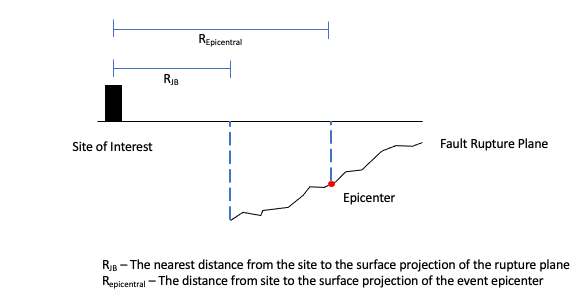
Figure 1: Source-to-site distance measurements
Figure 2 shows simulated ground motion generated from the set of inputs in the above Function block. Varying the seed may provide slightly different results due to the randomly generated phase angles that are used to formulate the time-history, but the frequency domain for a set of inputs remains the same. The central frequency vs time is shown in Figure 3
Figure 2: Time series of a sample ground motion
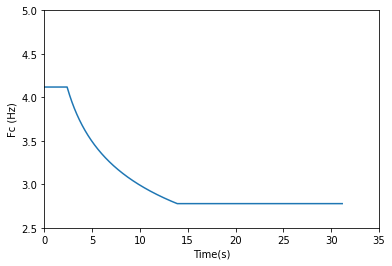
Figure 3: Central Frequency over Time Domain
Input Parameters
- FSSStyle of Faulting
Default:SS
C++ Type:MooseEnum
Controllable:No
Description:Style of Faulting
- R_typeRjbIndicates whether R distance is Joyner-Boore or Epicentral distance
Default:Rjb
C++ Type:MooseEnum
Controllable:No
Description:Indicates whether R distance is Joyner-Boore or Epicentral distance
- n1012Random Seed
Default:1012
C++ Type:unsigned int
Controllable:No
Description:Random Seed
- scale_factor9.81acceleration scaling factor
Default:9.81
C++ Type:Real
Unit:(no unit assumed)
Controllable:No
Description:acceleration scaling factor
- xy_data
C++ Type:std::vector<Real>
Unit:(no unit assumed)
Controllable:No
Optional Parameters
- control_tagsAdds user-defined labels for accessing object parameters via control logic.
C++ Type:std::vector<std::string>
Controllable:No
Description:Adds user-defined labels for accessing object parameters via control logic.
- enableTrueSet the enabled status of the MooseObject.
Default:True
C++ Type:bool
Controllable:No
Description:Set the enabled status of the MooseObject.
Advanced Parameters
Input Files
More detailed information on the development of this parameterized simulation method can be found at Sabetta et al. (2021).
References
- F. Sabetta, A. Pugliese, G. Fiorentino, G. Lanzano, and L. Luzi.
Simulation of non-stationary stochastic ground motions based on recent italian earthquakes.
Bulletin of Earthquake Engineering, April 2021, 2021.[Export]